
Introduction
CostLoop is a subscription management app for small businesses, freelancers, startups, remote teams, and individuals that need a clearer way to track recurring software costs. The public site presents it as a manual tracker for SaaS subscriptions, license renewals, cancellation links, invoices, contracts, owners, and recurring expenses. Its strongest fit is for users who want more structure than a spreadsheet without connecting bank accounts or adopting an enterprise procurement platform.
Key Features
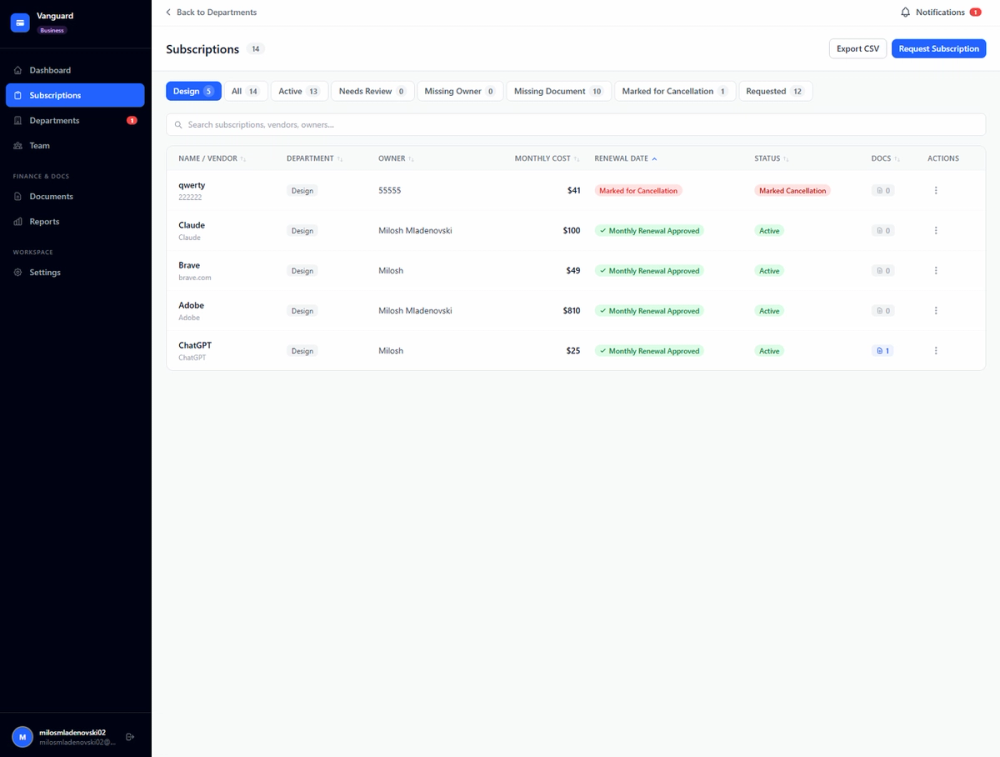
- Subscription tracking for recurring tools, including cost, billing cycle, category, status, owner, and renewal date.
- License tracking for seat counts, assigned users, expiry dates, departments, and related subscription information.
- Renewal reminders with email alerts and visible lead-time options such as 7, 14, or 30 days.
- Cost dashboards showing monthly spend, annual forecast, budget usage, category breakdowns, and basic analytics.
- Storage for cancellation links, invoice links, contracts, vendor agreements, receipts, and subscription notes.
- Health score, savings opportunities, unused seat detection, duplicate tool detection, CSV import, CSV export, workspaces, approvals, and admin dashboards on supported plans.
Use Cases
CostLoop is designed for the recurring-cost problems that appear when a business has several tools but no shared place to manage them. The CostLoop homepage highlights forgotten auto-renewals, unused seats, scattered invoices, lost cancellation links, unclear ownership, and limited visibility into total software spend.
For freelancers and solo consultants, CostLoop can serve as a lightweight recurring-cost register for domains, design tools, project management software, accounting services, hosting, and developer subscriptions. The value is not automatic spend discovery; it is having renewal dates, costs, documents, and cancellation context in one place.
For small teams and startups, the stronger use case is accountability. Owner records, departments, renewal calendars, subscription requests, approval flows, admin notifications, and workspaces can help teams decide who owns each tool and whether it still deserves budget before renewal.
Pricing
CostLoop publishes clear pricing on its pricing page. The Free plan is listed at $0 per month and lets users test with 1 subscription without a credit card. Pro is listed at $9 per month for 1 user and includes unlimited subscriptions, health score and breakdown, savings opportunities, renewal calendar view, CSV import and export, advanced reminders, bulk actions, and priority support. Business is listed at $39 per month and adds workspace and team member features, real-time subscription requests, approvals, instant email notifications to admins, a business panel view, and an admin-level dashboard. The page also mentions yearly billing with 2 months free, no annual lock-in, and cancellation from account settings.
User Experience and Support
CostLoop's product experience is built around manual entry rather than financial automation. Users add subscriptions themselves with details such as tool name, cost, renewal date, owner, and notes; the app then organizes spend, reminders, documents, exports, and review signals around those records. This keeps the workflow simple, but it also means teams need to maintain their subscription data consistently.
Support details are visible through the contact page, where CostLoop says email is the best way to reach the team and that replies arrive within 1 business day. The public pages also mention billing help, refund requests, plan changes, data export, account deletion, privacy requests, blog guides, email support, and priority support depending on plan.
Technical Details
CostLoop is a web-based subscription tracker with a no-bank-connection model. The site states that it is fully manual, does not connect to bank accounts or credit cards, and does not require read access to financial accounts. It also mentions CSV import and CSV export on supported plans, giving users a way to move subscription data in and out of the product.
Visible operational signals include payments through Stripe, authentication and data storage through Supabase, and email through Resend. The site also states support for 10 currencies, multiple languages, account deletion, data export, privacy settings, and GDPR-related controls.
Pros and Cons
Pros
- Clear focus on recurring software costs, renewals, owners, licenses, and related documents.
- Manual tracking avoids bank-account and credit-card connections, which may suit privacy-conscious users.
- Pricing is public and easy to compare across Free, Pro, and Business tiers.
- Practical record fields such as cancellation links, invoice links, contracts, notes, and owners address common subscription-management gaps.
- Business features such as workspaces, approvals, subscription requests, and admin dashboards make the product more useful for teams.
Cons
- Manual entry means CostLoop will not automatically discover every subscription from financial transactions.
- Some important features, including CSV import/export, health score, savings opportunities, advanced reminders, and team workflows, depend on paid plans.
- The product is not positioned as a full accounting, ERP, procurement, or expense-management system.
- Teams needing deep finance integrations or automated reconciliation should verify current capabilities before relying on it.
FAQ
What is CostLoop?
CostLoop is a subscription and recurring cost tracker for small businesses, freelancers, teams, and individuals. It helps users record software subscriptions, licenses, renewal dates, cancellation links, invoices, contracts, costs, owners, and notes in one place.
Who is CostLoop best suited for?
CostLoop appears best suited for users who already have multiple recurring tools and need a clearer operating process. It is especially relevant for freelancers, small businesses, startups, remote teams, and individuals who want subscription visibility without connecting financial accounts.
Does CostLoop connect to bank accounts or credit cards?
No. The public site says CostLoop is fully manual and does not connect to bank accounts or credit cards. Users enter subscriptions themselves, which gives them control over the records but also requires regular upkeep.
What can users track in CostLoop?
Users can track subscription names, costs, billing cycles, categories, statuses, renewal dates, owners, departments, seat counts, assigned users, notes, cancellation links, invoice links, contract URLs, vendor agreements, and document notes. The site also highlights renewal reminders, health score, dashboard analytics, and savings signals.
How much does CostLoop cost?
CostLoop lists a Free plan at $0 per month for testing with 1 subscription, a Pro plan at $9 per month for 1 user, and a Business plan at $39 per month. The pricing page also mentions yearly billing with 2 months free and cancellation from account settings.
How is CostLoop different from a spreadsheet?
CostLoop adds subscription-specific structure that spreadsheets usually lack, such as renewal reminder emails, health score, unused seat detection, duplicate tool flags, owner records, cancellation links, and document storage. A spreadsheet may still work for a tiny list, but CostLoop is built for recurring review.
What should teams verify before choosing CostLoop?
Teams should confirm which plan includes the features they need, whether manual tracking fits their process, and whether CostLoop's focused scope is enough. If they need automatic spend discovery, accounting sync, procurement workflows, or deeper finance integrations, they should verify those requirements directly.
Conclusion
CostLoop is a focused subscription tracker for users who want recurring software costs organized without linking financial accounts. Its public pages make the clearest case around renewal reminders, cost visibility, owners, cancellation links, document storage, and transparent pricing. For small businesses and freelancers replacing scattered spreadsheets, it is worth evaluating as a lightweight recurring-cost control system.