
IndieTools Review: A Practical Directory for Indie Products
If you are building a new product, the hard part is often not shipping the MVP. It is getting it seen by the right people.
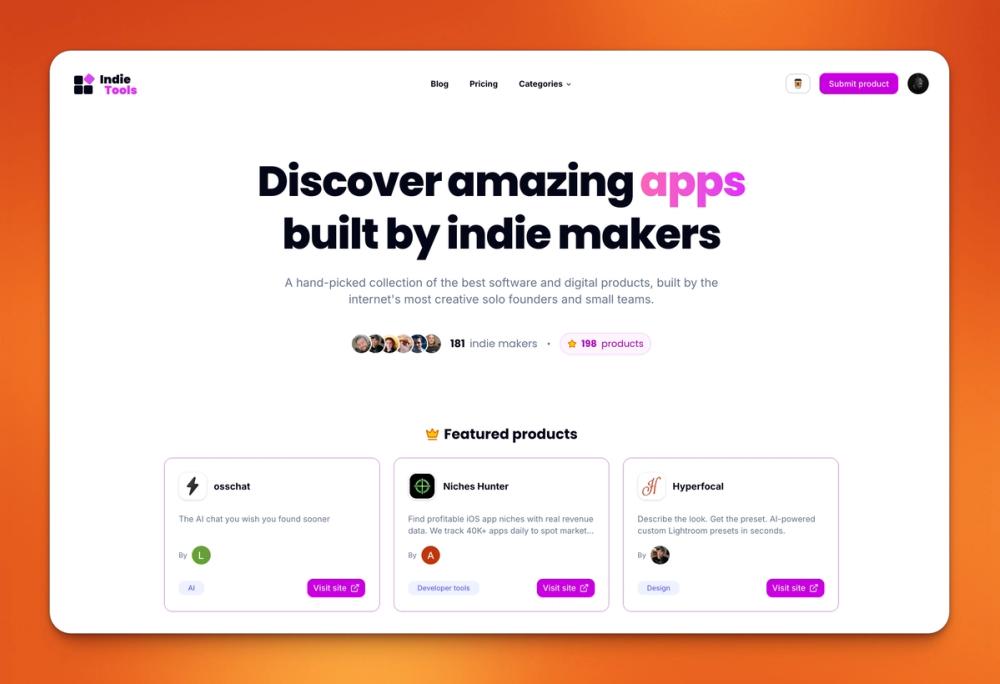
IndieTools is a curated directory for indie-made products, built around that exact problem. The homepage shows a hand-picked collection of apps, tools, and courses created by solo founders and small teams. It is not a noisy link farm, and it is not trying to replace your launch strategy. It works better as a discovery layer: one more place where potential users, founders, and collaborators can find you.
What makes IndieTools worth a closer look is the structure. Listings are organized by category, and the site already shows strong signs of editorial curation: featured products, sponsor products, searchable browsing, and category-based discovery. For founders, that matters because it turns a simple submission into a more useful product page with context.
Features
- Curated product listings with clear positioning
- Category browsing across AI, SEO, marketing, developer tools, productivity, and more
- Featured products and sponsor placements for extra visibility
- Product pages that present concise descriptions in a structured format
- A discoverability-first homepage that supports browsing, not just searching
- Newsletter-style community touchpoints that may create repeat exposure
The best part is that the site does not rely on vague labels. Many listings explain what the product does, who it helps, and why it exists. That makes the directory more useful for visitors and more credible for founders.
Problems It Solves
IndieTools solves a few real problems for makers:
- Low discovery: New products often disappear after launch day. A directory gives them another surface area.
- Weak positioning: Browsing similar products helps founders sharpen their own copy.
- Backlink and credibility gaps: A directory listing can support SEO, outreach, and trust.
- Category friction: Visitors can find tools by intent, not just by brand name.
- Launch fatigue: Instead of endlessly rewriting submissions, founders can use one clear product summary across multiple places.
Use Cases
For founders:
Submit a product to increase exposure, earn a backlink, and give curious users a clean place to learn more.
For indie hackers:
Study how successful listings describe features and benefits, then improve your own landing page.
For marketers:
Use directory listings as part of a broader distribution stack that includes SEO, social posts, and direct outreach.
For buyers:
Browse products by category to discover tools that are easier to evaluate than random social feeds.
How to submit a product
If you want to submit your product to IndieTools, prepare first. A strong submission usually includes:
- a one-line value proposition
- a short description of the core use case
- a polished logo and screenshots
- a live website or landing page
- clear category fit
Do not overcomplicate it. The goal is not to write a perfect pitch. The goal is to make the product obvious in seconds.
FAQ
Is IndieTools only for AI products?
No. The site covers AI, SEO, marketing, design, developer tools, productivity, and other categories.
Does a directory listing guarantee traffic?
No. It is best treated as supporting distribution, not a full growth strategy.
Is it useful for early-stage startups?
Yes. Early products often benefit the most because they need discovery, credibility, and feedback.
What should I include in my listing?
Keep it specific: what the product does, who it is for, and why it is different.
Final take
IndieTools is a sensible place to submit a product if you want more than a bare mention. It gives indie builders a curated environment where products are easier to browse, compare, and understand. That does not replace your launch work, but it does give it another channel.
For founders who care about organic discovery, a cleaner story, and practical visibility, IndieTools is worth submitting to.