
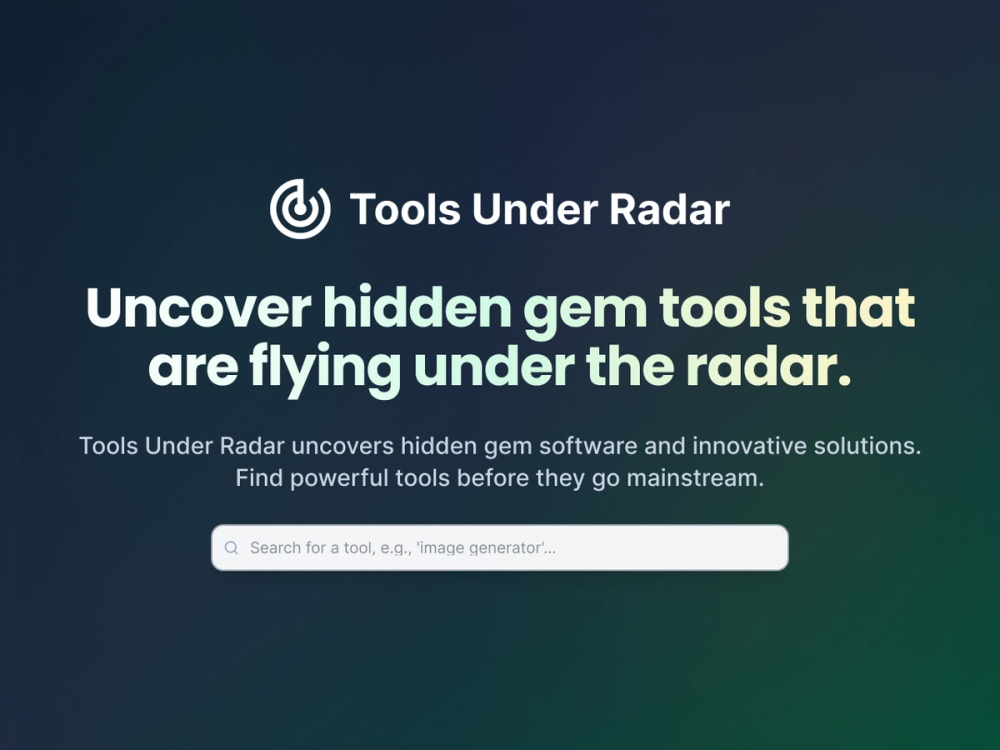
Tools Under Radar Review
Introduction
Tools Under Radar is a software directory built around underrated products across productivity, design, marketing, and developer categories. The site positions itself as a place to discover tools that may be useful in real work but have not yet received the same attention as larger, more established names.
From the public site, the main value proposition is clear: help users find overlooked software, browse it by category, and compare options with practical listing details such as pricing context and use case information. For founders, operators, and curious software buyers, that makes Tools Under Radar more of a discovery layer than a traditional review publication.
Key Features
- Focuses on underrated and lesser-known software rather than repeating the same mainstream recommendations.
- Covers a wide spread of categories, including productivity, design, marketing, development, analytics, team collaboration, and many other software niches.
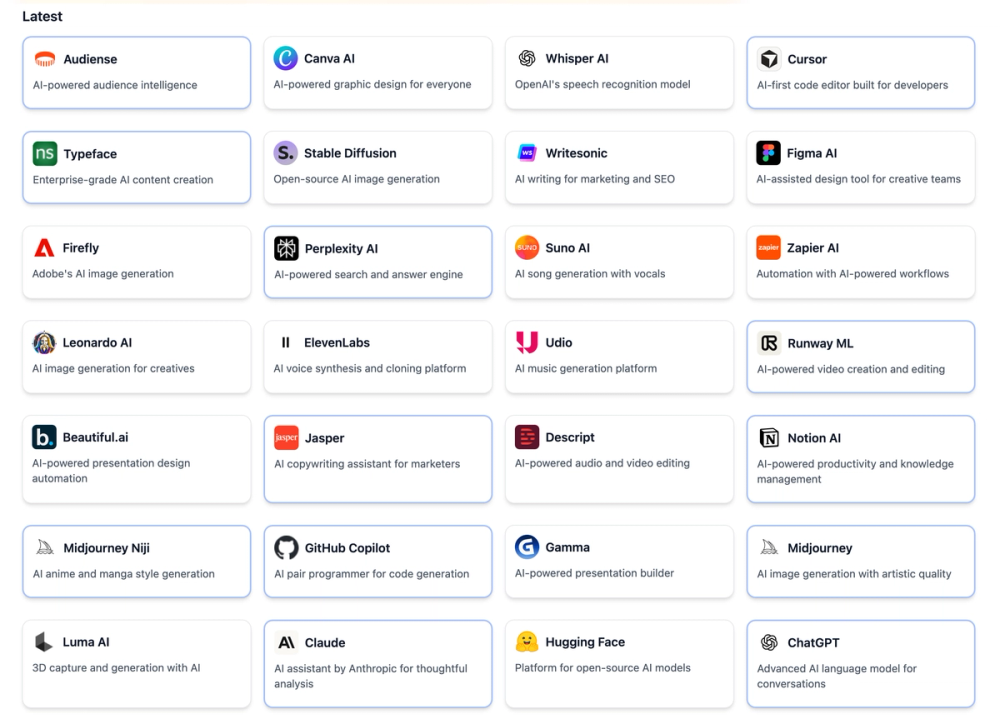
- Highlights featured tools on the homepage, giving visitors a quick way to explore current listings.
- Includes category context, pricing references, and use case details within listings according to the site's public copy.
- Supports browsing and narrowing options through category and pricing filters, based on the FAQ content visible on the site.
- Offers a public submission flow so makers can submit their own tools for review before inclusion.
Use Cases
One practical use case for Tools Under Radar is early-stage software discovery. If you are tired of seeing the same products listed in every roundup, the directory gives you another path. Instead of centering only category leaders, it surfaces tools that may solve similar problems in a different, sometimes simpler or more affordable way.
It also works as a lightweight research tool for teams comparing options across a workflow. The site says users can use category and pricing filters to narrow the field, then compare listings that support the same team need. That makes it relevant for people evaluating software without wanting to run a broad, unfocused search from scratch.
For founders and indie makers, Tools Under Radar has a second use case: visibility. The site includes a submission page and says submitted tools are reviewed before being added. That suggests the platform is designed not only for browsing but also for helping newer products get discovered by people actively exploring alternatives.
Pricing
The site states that browsing the directory, viewing listings, and comparing tools is free. That is the clearest pricing-related fact visible from the public content. At the same time, individual products listed in the directory may have their own pricing models, and Tools Under Radar appears to expose pricing context at the listing level to help with comparison.
There does not appear to be public pricing for submitting a tool in the evidence provided here, so it is better to treat submission cost details as not clearly exposed on the visible page.
User Experience and Support
From the visible navigation and page structure, Tools Under Radar appears straightforward to use. Visitors can move between sections such as Latest, Explore, Submit, Login, and Sign Up, and the homepage quickly introduces the site's purpose before showing featured tools and broader category coverage. That is a sensible structure for a directory because it supports both casual browsing and more intentional product research.
In terms of support, the visible content points more to editorial guidance and structured browsing than to a heavy support layer. The site includes an FAQ, Terms & Conditions, and a Privacy Policy, which helps establish baseline trust. However, there are no clearly exposed details in the source evidence about live chat, help-center depth, onboarding assistance, or response-time expectations.
Technical Details
The public site clearly frames Tools Under Radar as a web-based software directory, but it does not expose much technical implementation detail. There is visible evidence of broad category coverage, a searchable interface, user account entry points, and a submission flow, but not of the underlying stack, APIs, or platform architecture.
There is also a mention of Chrome among the extracted signals, but that alone is not enough to make a strong technical claim about integrations or browser-specific functionality. Based on the available evidence, it is safest to describe Tools Under Radar as a directory platform with filtering, submission, and listing features rather than speculate about the technology behind it.
Pros and Cons
Pros
- Strong positioning around hidden-gem software rather than overexposed tools.
- Broad category coverage makes the directory useful for different kinds of software research.
- Free browsing lowers the barrier for users who want to compare products.
- Submission flow gives makers a visible path to get their tools considered.
- Listing structure appears designed around practical evaluation, not just name-only exposure.
Cons
- Public technical details are limited, so advanced buyers may want more transparency about platform capabilities.
- The evidence provided does not clearly show how deep each listing goes beyond summary-level comparison information.
- Submission requirements and review criteria are not fully visible in the available source material.
- Support channels are not clearly described beyond basic site pages and FAQ content.
- Users looking for mainstream enterprise software may find the focus on underrated tools narrower than large review marketplaces.
Conclusion
Tools Under Radar is best understood as a discovery-focused software directory for people who want to look beyond the usual shortlist. Its public messaging is consistent: surface overlooked tools, organize them clearly, and make comparison easier through category, pricing, and use case context.
If you value finding lesser-known products before they become widely discussed, Tools Under Radar offers a practical place to browse. For makers, the built-in submission path also makes it relevant as a lightweight visibility channel, provided the directory's audience and categories fit the product being submitted.