
Same Product Review
Introduction
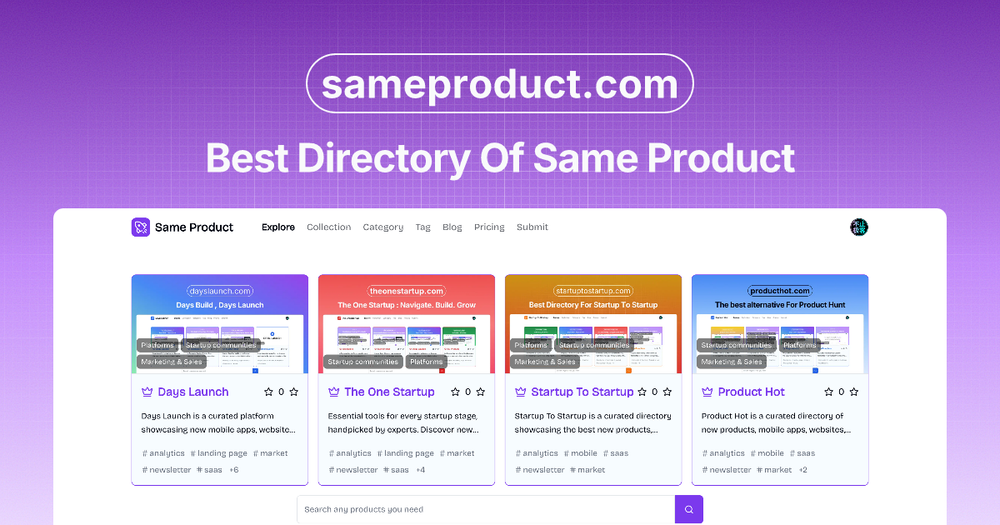
Same Product presents itself as a curated directory for discovering new products, with a focus on mobile apps, websites, and technology products. Based on the public homepage content, the platform is positioned as a product discovery site rather than a single-purpose SaaS tool, giving visitors a way to browse recently listed products, category groupings, and community-oriented elements such as a newsletter.
For people researching startup directories or looking for places to surface a new launch, Same Product appears to be built around visibility and browsing. The public-facing copy emphasizes curation, discovery, and daily product exploration, which makes it relevant to founders, makers, and users who want to keep track of new tools and digital products.
Key Features
- Curated product discovery focused on new mobile apps, websites, and technology products.
- Category and tag-based browsing, as indicated by visible navigation and large category groupings across the site.
- Product exploration pages that highlight multiple listings on the homepage.
- Newsletter signup and community join prompts that suggest an audience-building layer around the directory.
- Sections for weekly, monthly, and yearly top products, which help visitors scan featured or recurring listings.
- Submission and sponsor-related navigation items, showing that the platform supports product promotion workflows at some level.
Use Cases
Same Product is most useful for founders and indie makers who want another discovery surface for a product launch. A curated directory can help early-stage teams place their product in front of visitors who are already browsing for new tools, startups, and software ideas. From the public page structure, Same Product seems designed to support that type of lightweight exposure.
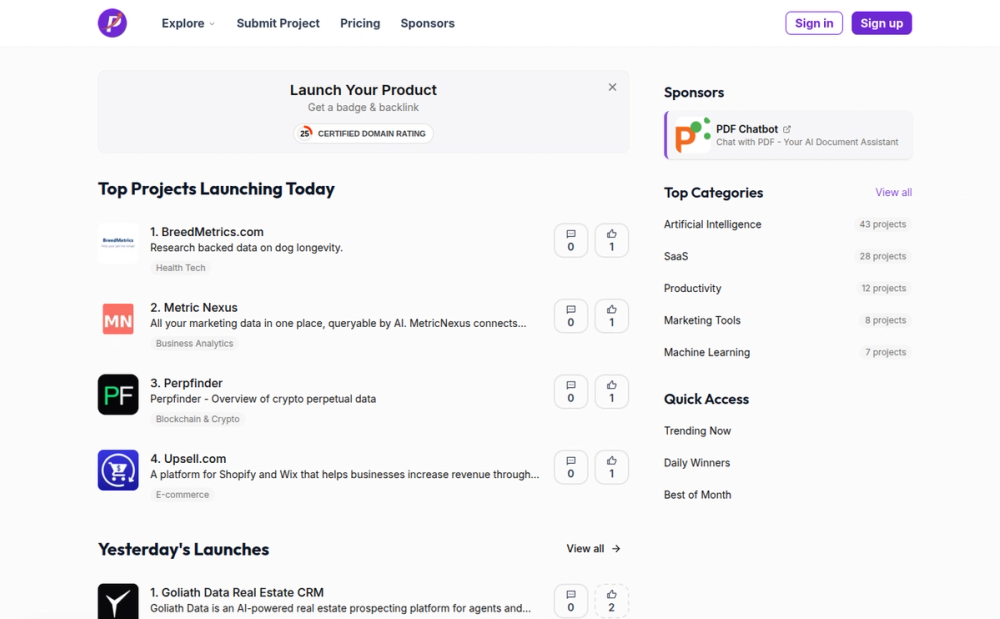
It can also serve users who prefer browsing organized product collections instead of relying only on search engines or social feeds. The homepage signals several ways to explore, including category navigation, top-product groupings, and product cards. That structure is useful for people comparing tools or looking for inspiration across different software categories.
A third use case is ongoing market scanning. Operators, marketers, and product enthusiasts may use a site like Same Product to monitor newly featured products, spot trends in popular categories, or identify directories and communities adjacent to their own launch strategy.
Pricing
A public "Pricing" navigation item is visible on the site, but the fetched source does not clearly expose plan details, billing structure, or whether listings are free, paid, or tiered. Because those specifics are not visible in the provided evidence, pricing should be treated as unclear until reviewed directly on the relevant pricing or submission pages.
User Experience and Support
The visible site structure suggests a directory-style experience with navigation for search, categories, tags, product collections, and ranking-based product sections. That likely makes the platform easier to scan than a simple static landing page, especially for visitors who want to browse by topic or product type rather than search for one exact tool.
In terms of support, the public signals are limited. The site includes newsletter and community prompts, along with standard company and policy pages, but the provided source does not clearly confirm documentation depth, onboarding help, direct customer support channels, or response expectations. Anyone evaluating Same Product for submission should verify those details on the live site.
Technical Details
The source does not expose much technical implementation detail. The homepage text includes a visible reference to being "Built with Mkdirs," which may indicate part of the site stack or site-building framework, but the evidence is too limited to make stronger technical claims.
Beyond that, the public page mainly reveals information architecture rather than engineering specifics. There are visible references to search, categories, tags, studio, and submission-related navigation, but no confirmed API details, integration model, or backend stack is clearly documented in the supplied source.
Pros and Cons
Pros
- Clear positioning as a curated product discovery directory.
- Broad browsing structure with categories, tags, and top-product sections.
- Relevant for founders seeking extra launch visibility.
- Community and newsletter elements may help extend discovery beyond a single listing.
- Submission and sponsorship paths appear to exist on the public site.
Cons
- Pricing details are not clearly visible in the provided evidence.
- Support and onboarding depth are difficult to assess from the public homepage signals alone.
- Technical capabilities and platform mechanics are not clearly documented in the fetched source.
- Some homepage content appears dense, which may make the core value proposition less immediately clear to first-time visitors.
Conclusion
Same Product looks like a curated startup and product directory built for discovery, browsing, and launch visibility. If you are evaluating it as part of a distribution strategy, the public site suggests useful discovery features and broad category coverage, but you should review the live pricing, submission, and support details directly before making a final decision.